
Single Point of Accountability
One operating partner coordinates IT, cloud, security and workplace technology so issues are owned properly and not passed between disconnected suppliers.
Managed Services
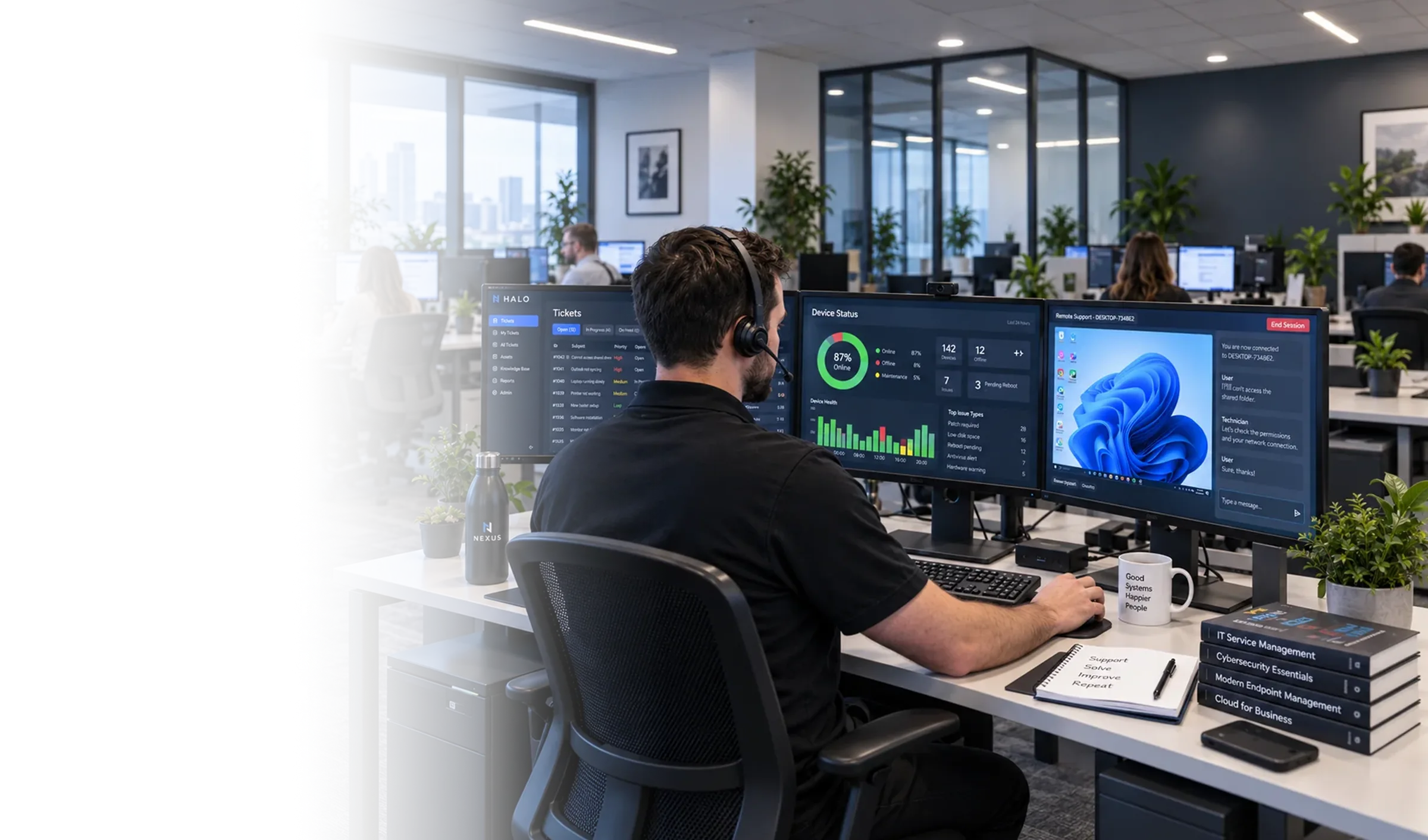
Komstadt combines day-to-day IT support, cloud administration, cybersecurity, workplace technology and meeting-room care into one managed service model—with clearer ownership, faster response and better visibility for management.
A Clearer Managed Service Model
How the Service Fits Together
At the centre of most managed-service engagements is the platform and security layer—where reliability, protection, administration and operating control come together.
A coordinated operating layer covering infrastructure, cloud administration, security controls, resilience and the governance records needed to manage the environment properly.
Administration, health oversight and operational management of user devices, servers and connected endpoint assets.
Core switching, gateways, wireless services and the connectivity layer that keeps the workplace online.
Tenant administration, identity, email, collaboration tools and day-to-day cloud support.
Patching, cyber hygiene and security controls that help reduce exposure to known vulnerabilities.
Backup status, recoverability and operational resilience reviewed as part of ongoing service health.
User access, account administration and practical control of who can reach business systems and data.
Maintain an up-to-date view of the infrastructure, connected assets and key platform information.
Structured reporting gives management visibility of service health, recurring issues and operational priorities.
Track ageing systems, unsupported software and equipment approaching end of life before they become a problem.
Planning guide
Managed IT helps organisations coordinate monitoring, end-user support, cloud services, security administration and workplace technology operations.
Managed IT typically uses a defined scope and ongoing operational process, while a one-off engagement addresses an individual incident or project.
Asset visibility, access management, patching, incident response planning and independent reviews help management understand risks and prioritise improvements.
Define the systems and users in scope, support channels, escalation responsibilities, operating hours and reporting needs. A clear onboarding and asset record helps establish an effective service baseline.